While the nearshoring conversation stays focused on manufacturing and exports, an equally powerful domestic engine is reshaping Mexico's industrial map: e-commerce. Accelerating digital consumption is saturating Mexico City's traditional logistics corridors and pushing CEDIS demand toward new geographic frontiers.
1. The Boom Redefining Warehouse Demand
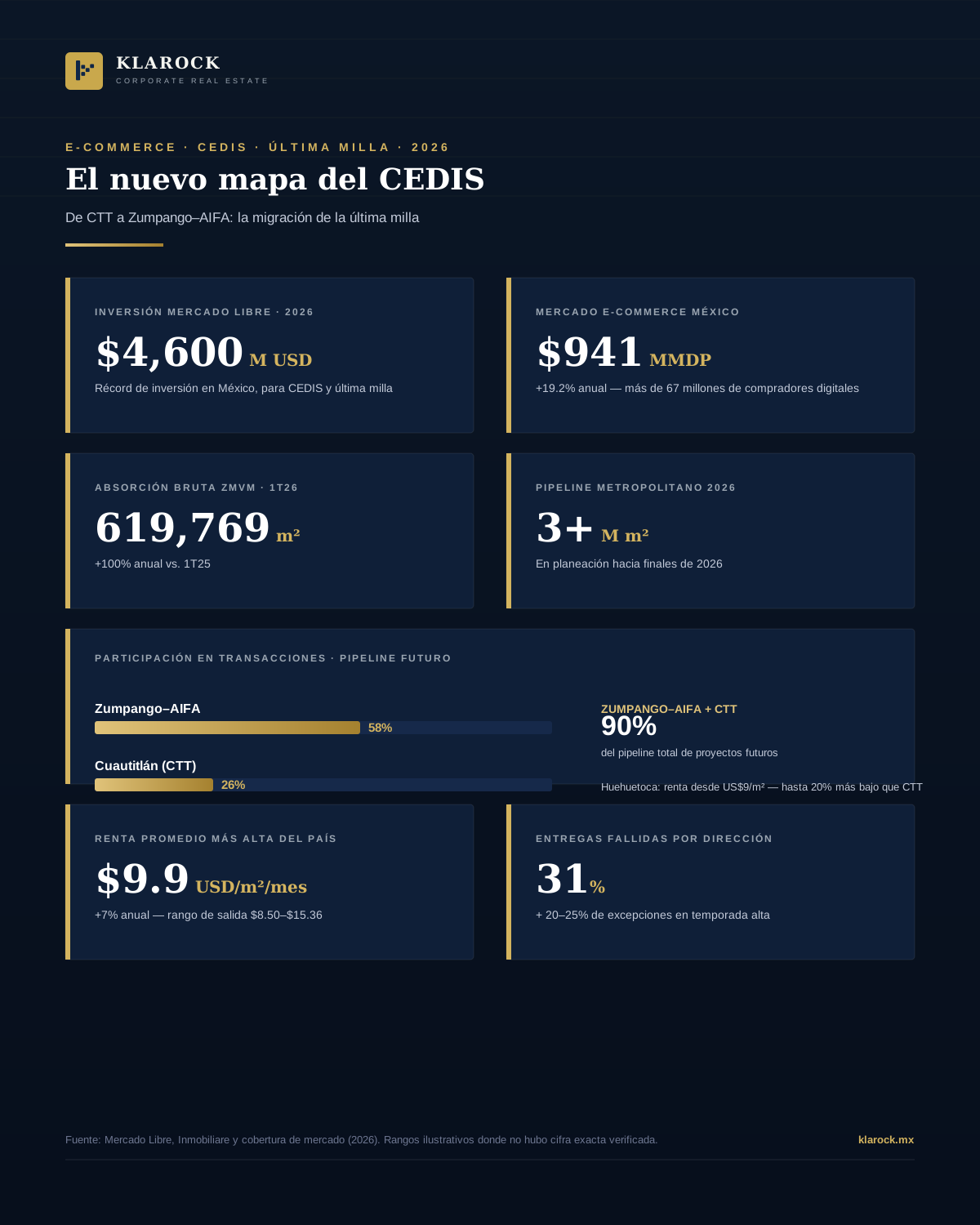
- —A consolidated digital consumer: Mexico now counts more than 67 million digital shoppers, and its e-commerce market reached MXN $941 billion, growing 19.2% year over year.
- —Last-mile logistics in sustained expansion: Mexico's last-mile market is projected to exceed USD $3.6 billion by 2030, growing at a 7.4% CAGR.
- —The sector's boldest bet: Mercado Libre announced a record USD $4.6 billion investment for Mexico in 2026 to expand its distribution centers and cut delivery times even in remote areas.
2. The Corridor That No Longer Fits: CTT
- —Historic concentration: Amazon, Mercado Libre, Walmart, Coppel, Liverpool and AliExpress have reinforced their CEDIS presence in the Cuautitlán–Tultitlán–Tepotzotlán (CTT) corridor, the most dynamic in Greater Mexico City.
- —Absorption doubling: gross industrial absorption in the metro area totaled 619,769 m² in Q1 2026, a 100% annual increase versus the same period in 2025.
- —An unprecedented pipeline: by late 2026, planned industrial projects in the metropolitan region will exceed 3 million m².
3. The New Frontier: Zumpango–AIFA and Huehuetoca
- —Two corridors concentrate the future: Zumpango–AIFA and CTT together account for 90% of the region's future project pipeline. Zumpango–AIFA alone represented 58% of recorded commercial transactions, followed by Cuautitlán at 26%.
- —Huehuetoca, the new land reserve: the area is emerging as the functional answer for large-footprint requirements and macro-CEDIS development, with rents starting at USD $9/m² — up to 20% lower than the CTT corridor.
- —Connectivity as the engine: the corridor's link to Felipe Ángeles International Airport (AIFA) and to the state of Hidalgo is accelerating its consolidation as an emerging industrial hub.
4. The Price of Speed
- ·Asking rents: between USD $8.50 and $15.36/m²/month for new warehouses in the metro area; the highest national average sits at USD $9.9/m²/month (+7% year over year).
- ·Inaccurate addresses: cause 31% of failed deliveries nationwide.
- ·Peak-season exceptions: 20% to 25% due to the customer being absent at delivery.
- ·Urban congestion: the most-cited operational challenge in Mexico City, Guadalajara and Monterrey.
At Klarock, we help logistics operators and retailers identify and secure industrial land before corridor migration drives prices up. Deciding where to place the next last-mile CEDIS no longer depends only on proximity to the consumer — it depends on anticipating where the infrastructure is headed.