← Back to home

Corporate · 2026-08-26

75% Isn't Growth, It's Consolidation: The Real Office Demand in Mexico City

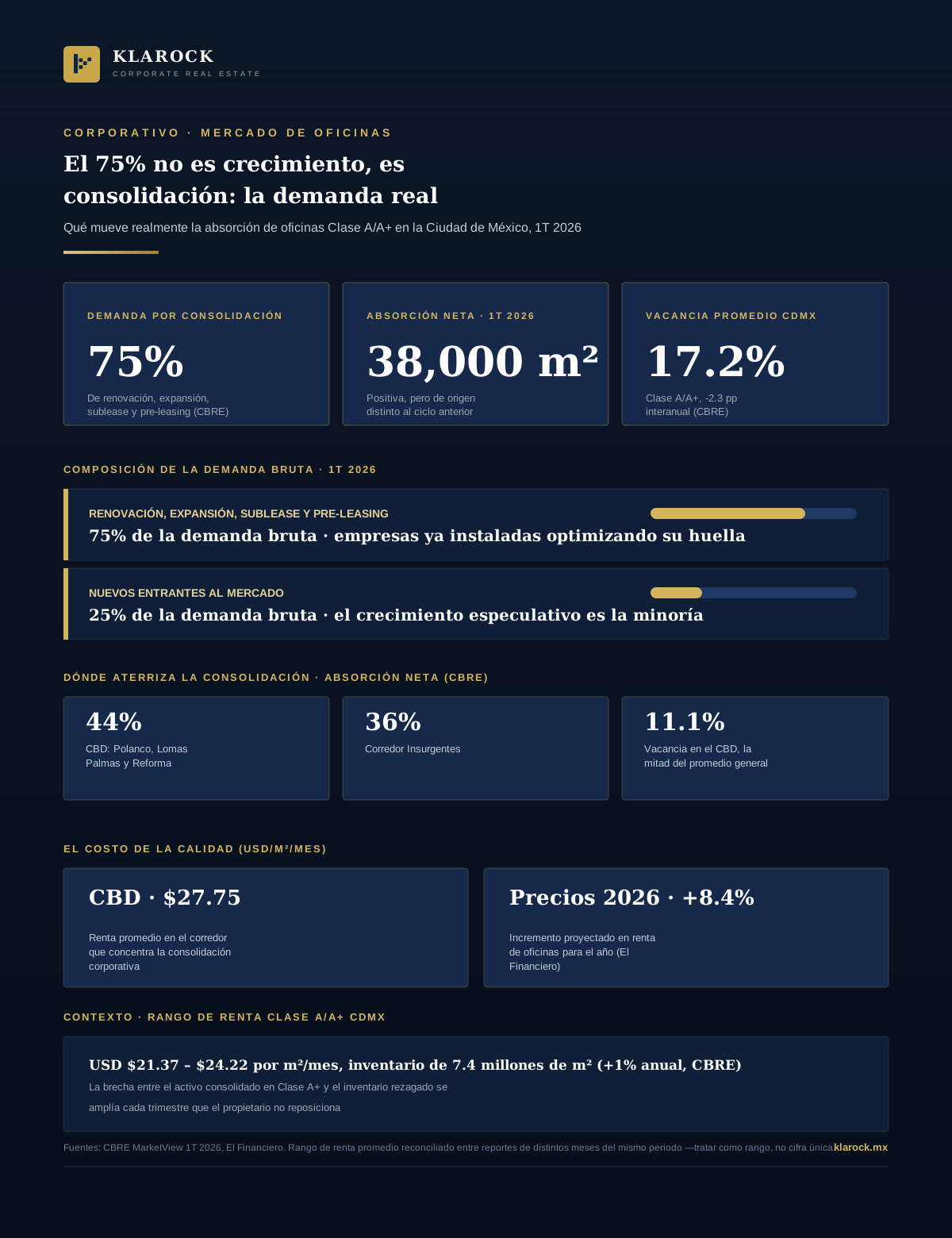
Class A/A+ office vacancy in Mexico City dropped to 17.2% this quarter and net absorption turned positive again. But 75% of that gross demand didn't come from new companies — it came from renewals, expansions, subleasing and pre-leasing. This is a market reorganizing, not growing.
75% Isn't Growth, It's Consolidation: The Real Office Demand in Mexico City

Every quarter office vacancy drops, the narrative simplifies to "the market is recovering." That's true in aggregate: CBRE reported Class A/A+ vacancy of 17.2% in Mexico City during the first quarter of 2026, a 2.3-percentage-point improvement year over year. But underneath that figure sits a data point every corporate real estate director should watch more closely than vacancy itself: 75% of the quarter's gross demand didn't come from companies entering the market — it came from companies already established, renewing, expanding, subleasing or pre-leasing their current space.

1. The Data Point That Changes the Reading

  • —75% of gross demand came from renewal, expansion, subleasing and pre-leasing during the first quarter of 2026, per CBRE. Only the remaining 25% is genuinely new demand.
  • —Growing and reorganizing aren't the same thing: a company that renews or expands its lease was already operating in the city. Its decision doesn't add new structural demand — it reflects a reallocation of real estate budget toward higher-quality buildings.
  • —Subleasing as a symptom: when sublease activity is a meaningful share of gross demand, it usually signals companies releasing surplus square footage from hybrid schedules, not expanding headcount.

2. Positive Absorption, Different Origin

  • —38,000 m² of net absorption for the quarter — positive, but modest against the city's total 7.4 million m² of Class A/A+ office inventory.
  • —The CBD (Polanco, Lomas Palmas and Reforma) captured 44% of that net absorption, with Insurgentes adding another 36% — together they account for 80% of the city's net demand, with a combined vacancy of just 11.1% against the 17.2% citywide average.
  • —Consolidation lands where quality is certified: companies that renew or expand aren't doing it in just any building — they're doing it in prime corridors, reinforcing the polarization between Class A+ assets and the rest of the inventory.

3. Consolidation Comes at a Price

  • —Average CBD rent of USD $27.75/m²/month, well above the citywide range of USD $21.37 to $24.22/m²/month for Class A/A+.
  • —El Financiero projects an 8.4% increase in Mexican office rental prices for 2026 — added pressure for companies that already chose to pay more for certified quality and location.
  • —Smaller footprint, better building: the pattern consistent with hybrid schedules is shrinking total footprint per employee while moving up in building class — which sustains price per m² even with moderate aggregate demand.

4. The Read for Institutional Owners and Investors

If 75% of demand comes from companies already operating in the city reallocating their real estate budget toward higher-quality buildings, the relevant question for every owner stops being "how much demand is there?" and becomes "can my asset capture that reallocation?" A building that doesn't meet the certification, location and experience standards the average corporate mandate now requires is structurally excluded from that demand, regardless of how much the aggregate market grows.

At Klarock, we assess whether your office portfolio is positioned to capture consolidation demand — or whether it needs a repositioning plan before the price gap between Class A+ and the rest of the inventory widens further.

Interested in this opportunity?

Reach out and a managing partner will contact you within 24 business hours.

Contact a Managing Partner