The performance of the industrial real estate sector in the Guadalajara Metropolitan Area during the first half of 2026 reflects a mature market balancing construction momentum with selective demand. Despite international macroeconomic challenges —such as political positioning around USMCA—, domestic fundamentals and capital attraction continue to support the region's logistics infrastructure.
1. Macroeconomic Context and Regional Impact
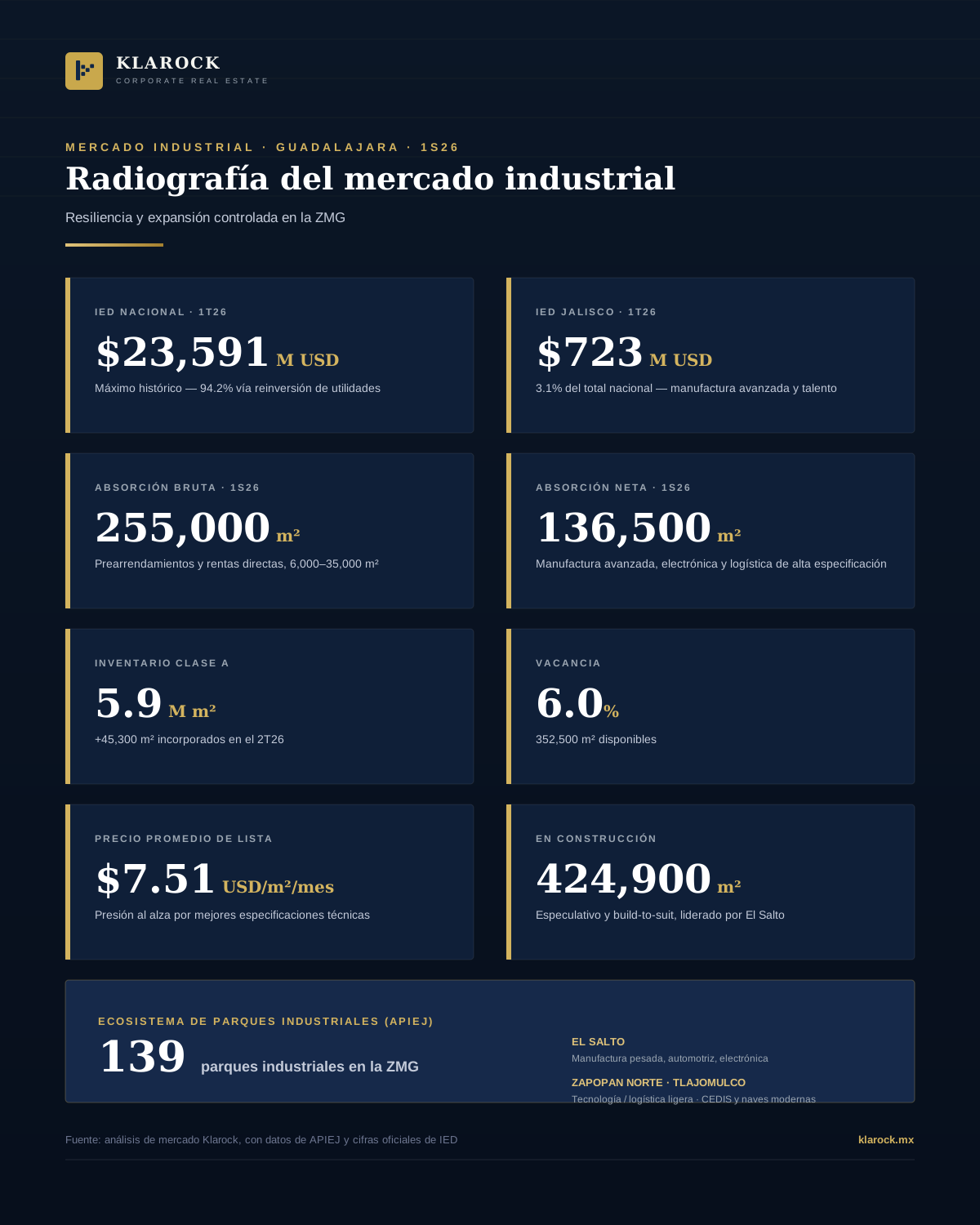
- —Record Foreign Direct Investment (FDI): nationally, FDI reached a historic high of $23.591 billion USD as of 1Q26, driven strongly by profit reinvestment (94.2%), validating confidence in Mexico's manufacturing and logistics sectors.
- —Jalisco's role: the state captured $723 million USD in FDI over the same period (3.1% of the national total), reaffirming its specialization in advanced manufacturing, skilled talent, and connectivity.
- —Side effects of major events: the conclusion of the 2026 FIFA World Cup left an economic impact of over 11,500 million pesos in Jalisco, exceeding forecasts thanks to tourism and generating particular momentum in local commerce.
2. Demand, Absorption, and Deal Activity
- —Space commercialization: cumulative gross absorption in 1H26 exceeded 255,000 m², while net absorption stood at close to 136,500 m², showing that building occupancy remains active despite a more gradual pace.
- —Deal types and sectors: transactions ranged from 6,000 m² to over 35,000 m² via pre-leases and direct leases. The sectors with the most traction were advanced manufacturing, electronics, and high-spec logistics.
- —Strategic location: absorption activity concentrated mainly in the El Salto and Zapopan Norte corridors.
3. Supply, Inventory, and Pricing
- —Infrastructure growth: with the addition of 45,300 m² in 2Q26, Class A industrial inventory reached 5.9 million m².
- —Availability and vacancy: new supply temporarily outpaced net absorption, raising available space to 352,500 m² and putting the vacancy rate at 6.0%.
- —Upward pricing pressure: the average asking lease rate closed at US$7.51/m²/month, a trend driven by the integration of spaces with better technical specifications and the strength of consolidated submarkets.
4. Construction Pipeline and Geographic Distribution
- —Construction momentum: there are currently 424,900 m² under development (both speculative and build-to-suit), with clear leadership from the El Salto corridor, complemented by targeted projects in Zapopan Norte and Periférico Sur.
- —Industrial park ecosystem: according to the Jalisco Industrial Parks Association (APIEJ), the metro area has 139 industrial parks, 97% of which are specialized by submarket:
- ·El Salto: priority focus on heavy manufacturing, automotive, and electronics.
- ·Zapopan Norte: focused on technology and light logistics.
- ·Tlajomulco: development of modern buildings and distribution centers (DCs).
At Klarock, we track these indicators closely to advise every expansion, relocation, or investment decision in the Guadalajara Metropolitan Area — and across Mexico's other industrial corridors — with real data.