Retail · 2026-08-06
A JLL analysis confirms which categories e-commerce can't replicate. Why wellness, dining, and entertainment went from amenities to anchors of physical retail.
For years, the shopping mall was defined by its anchor stores and fashion corridors. That formula no longer cuts it. Facing the unstoppable rise of e-commerce, real estate developers found a flank digital platforms can't replicate: physical, social, sensory experience. That's where three categories redefining the business come in: wellness, dining, and entertainment.
An analysis by consultancy JLL, released in mid-2026, is explicit about it: these three categories are the least replaceable by the rise of online experiences, precisely because no one can "live" them through a screen. You can't order a massage through an app, a group yoga class, a brunch with friends, or an afternoon at a trampoline park. That impossibility of going digital is, today, the most valuable competitive edge physical retail has left.
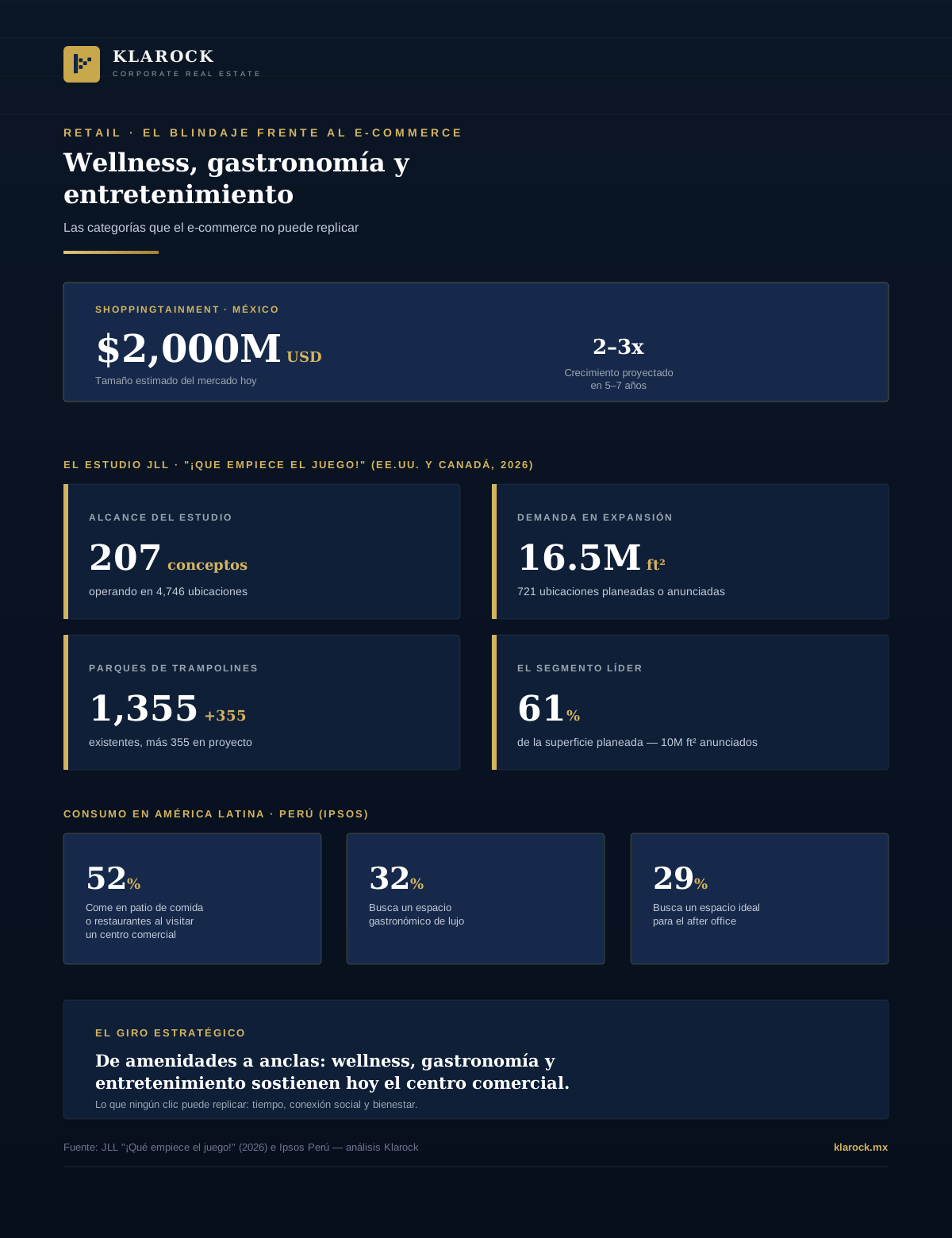
JLL's report, titled Let the Games Begin!, analyzed entertainment-tenant behavior in the U.S. and Canada during 2026. The results show an industry in full expansion: the study covers 207 concepts operating across 4,746 locations, with 721 additional locations planned or announced — representing 16.5 million square feet of demand.
Within that wave, one format stands out above the rest: trampoline parks and kids' play zones. According to the same study, this category has 1,355 existing establishments and 355 in the pipeline, representing 61% of total planned square footage and 10 million square feet of announced space — making it the single largest segment within commercial entertainment.
In Latin America, the trend is confirmed by direct consumption data. In Peru, an Ipsos study found that 52% of consumers eat at food courts or restaurants during mall visits, with considerable average spend, especially among younger generations. In addition, 32% look for a premium dining space and 29% want one ideal for after-office — confirming that food stopped being a complement and became a reason to visit in its own right.
The logic behind this strategy is simple but forceful: e-commerce can sell almost any product, but it can't sell an experience lived in community. Jimmy Arakanji, co-founder of Thor Urbana, sums it up from the developer's point of view: traditional store brands now use physical space more as a connection point, showroom, or emotional touchpoint than as inventory storage, leaning on their digital channels to reduce on-floor stock.
This has pushed wellness, dining, and entertainment from "amenities" into anchors of entire commercial projects, carrying the same weight — or more — that a department store held twenty years ago. The phenomenon has its own name in the industry: shoppingtainment, a market estimated at around two billion dollars in Mexico today that could double or triple over the next five to seven years.
The paradigm shift isn't happening in a vacuum. Consumer studies show visitors increasingly value rest and disconnection spaces within malls: benches, green areas, and charging zones directly influence how long a person stays on-site. In parallel, upscale malls have successfully capitalized on the desire for in-person experiences by combining fashion, dining, art, and technology, translating into double-digit foot-traffic growth in some markets.
In other words: the mall of the future doesn't compete against Amazon by selling products. It competes by offering something no click can replicate — quality time, social connection, and well-being — and that's where wellness, dining, and entertainment have become physical retail's strongest trench.
At Klarock, we support this transition by marketing and structuring the commercial and mixed-use assets where these experiences take shape.
Reach out and a managing partner will contact you within 24 business hours.
Contact a Managing Partner